The day the Sydney Opera House opened

20-10-1973
The Sydney Opera House is a very special building. Before the construction started, a total of 233 proposals came to the competition for its future appearance. A not very well-known architect from Denmark won the proposal competition. He hadn’t visited Australia before, but his design which was similar to a sailboat was perfect for Australia.
The construction began in 1959 and it was completed in 1973. It was clear to everyone who saw the new building that it was something special.
When the Sydney Opera House opened on October 20, 1973, it was a great moment. Queen Elizabeth II of Great Britain also came to see the event. Soon it entered architecture text books and became a symbol of Australia.
The building goes 25 meters under sea level and 67 meters above sea level.
The Sydney Opera house is visited by over two million people a year.
Difficult words: event (an important or interesting moment), proposal (a plan for a building), appearance (how something looks).
Based on the text provided, on what date did the Sydney Opera House open, which notable visitor attended the event, and what are the building’s measurements relative to sea level?
Learn 3,000 words with Days in Levels
Days in Levels is designed to teach you 3,000 words in English. Please follow the instructions below.
How to improve your English with Days in Levels
-
Test
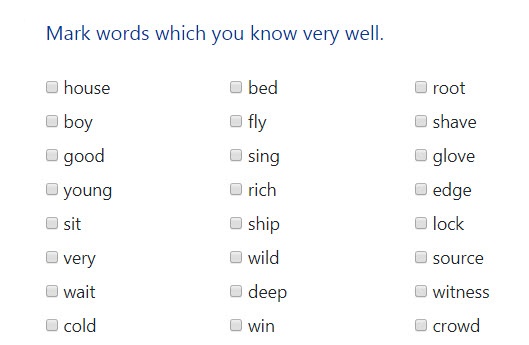
- Do the vocabulary test at Test Languages.
- Choose your level: Level 1 if you know up to 1,000 words, Level 2 if you know 1,000–2,000 words and Level 3 if you know 2,000–3,000 words.
-
Reading
- Read one or two articles at Days in Levels every day.
- Read one older article too and check if you still remember all the new words.
-
Listening
- Play the audio and read the text at the same time. The sentence you hear is highlighted.
- Then listen to the article again without reading the text.
-
Writing
- Answer the question under the article. Write your answer in full sentences in your notebook.
-
Speaking
- Find a partner to speak English with at Speak in Levels.
- Talk about the article or use the questions from Speak in Levels.